
7 Warning Signs Your Tree Needs to Come Down
Learn 7 warning signs your tree needs to be removed — dead wood, leaning trunks, fungal growth, and more. Expert advice from B. Woody's Tree Service.
A tree typically needs to come down when you see one or more of these warning signs: large dead branches overhead, a sudden lean after a storm, fungal growth at the base, cracks or splits in the main trunk, hollow or decayed wood, a history of root disturbance, or significant canopy die-back from pests like Emerald Ash Borer. When in doubt, call a professional.
Key Takeaways
- Dead branches larger than 2 inches in diameter pose an immediate falling hazard and may warrant full removal
- A new lean of more than 15 degrees — especially after rain or wind — signals root failure requiring emergency assessment
- Bracket fungi at the base indicate internal decay that often can't be reversed
- Emerald Ash Borer has killed tens of millions of ash trees across Missouri; an infested ash rarely recovers
- Free estimates available from B. Woody's Tree Service — (636) 970-9023
Knowing when a tree truly needs to come down is one of the most common questions Bryan Wood fields every week from homeowners across St. Charles County, St. Peters, O'Fallon, and Chesterfield. After more than 20 years removing trees in the St. Louis metro area, he's seen how quickly a "probably fine" tree becomes a roof-crushing emergency. This guide walks through seven specific warning signs — the same ones any trained arborist checks during a hazard assessment — so you can make an informed call before a storm makes it for you.
For a broader look at tree health in the area, see our tree safety assessment guide for St. Louis homeowners.
1. Is That Dead Wood in the Crown a Real Danger?
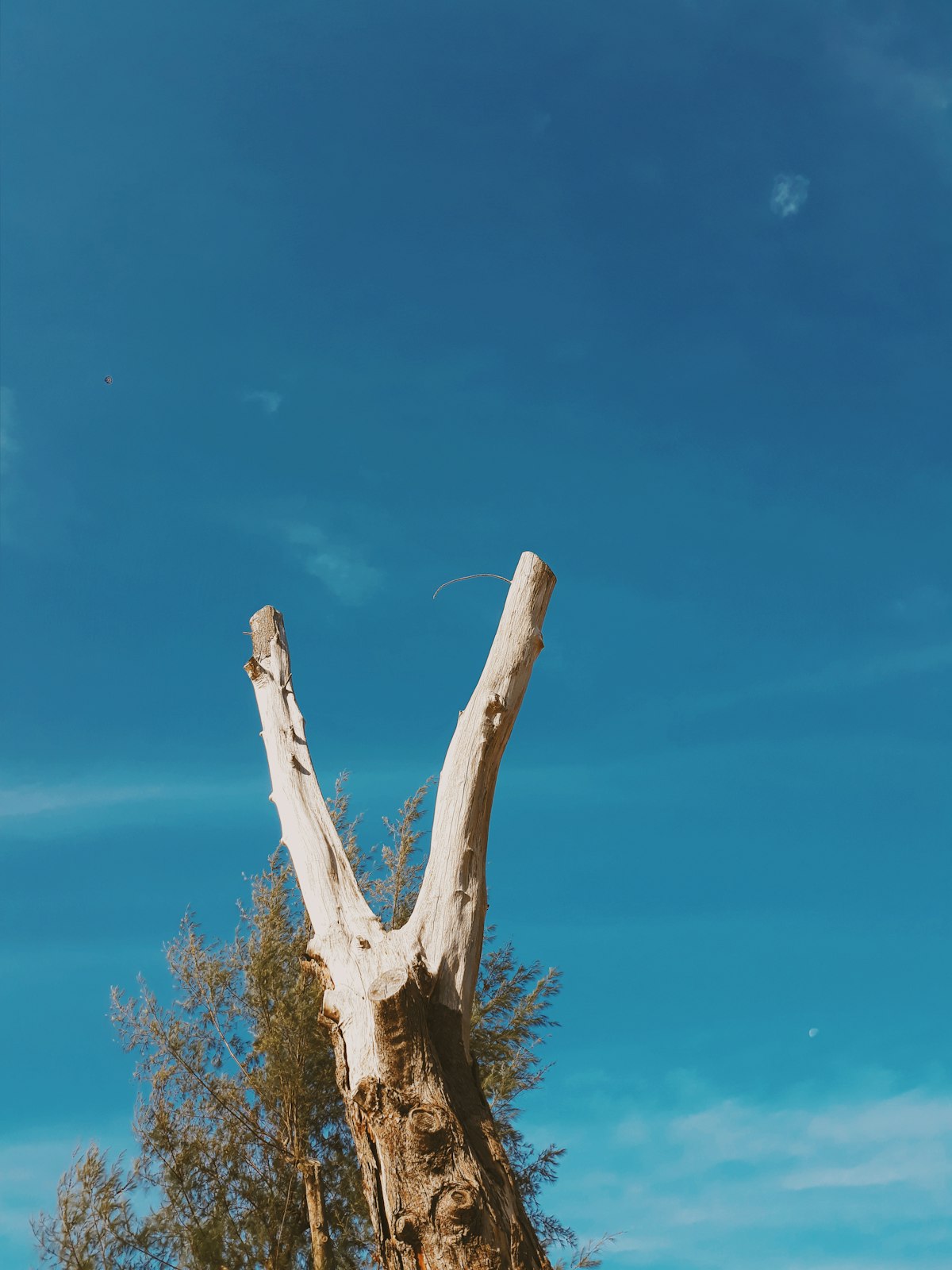
Dead branches are the most common hazard Bryan encounters on residential properties in St. Charles County. According to the International Society of Arboriculture, deadwood is a leading cause of tree-related property damage in North America because it loses tensile strength gradually — until a wind gust or ice load finishes the job. Any dead branch thicker than 2 inches sitting above a structure, power line, or area where people walk is a removal candidate. Multiple large dead branches throughout the crown suggests the tree itself is dying and likely can't be saved by pruning alone.
Bryan's field observation: "In 20-plus years of work, the calls I get after storms are almost always trees that already showed dead wood. Homeowners noticed it but figured it wasn't urgent. Deadwood doesn't wait for a convenient time to fall."
The fix isn't always full removal. Sometimes deadwooding — removing only the dead material — can extend a tree's life by years. But if more than 25–30% of the crown is dead, or if the dead sections are concentrated along the main scaffold limbs, removal is usually the safer and more economical path.
2. Does a Lean Mean Your Tree Is About to Fall?
Not every lean is dangerous — that's an important distinction. Trees lean toward sunlight naturally over decades, and a stable, long-standing lean with a full healthy root plate usually isn't a problem. What concerns Bryan is a new lean: one that appeared suddenly after a heavy rain, after saturated soil conditions in spring, or after a windstorm. In the St. Louis metro, where clay-heavy soils get waterlogged fast, root zones can shift quickly.
A new lean of more than 10–15 degrees from vertical, combined with cracked or heaved soil on the opposite side of the lean, is a strong indicator of root plate movement — the tree is starting to tip. At that point, removal is urgent. An emergency situation like this is exactly when you call B. Woody's at (636) 970-9023 for a same-day assessment. Our emergency tree service is available 24 hours a day.
3. What Does Fungal Growth at the Base Actually Tell You?
Fungi growing at the base of a tree — particularly shelf or bracket fungi — are a visual signal of internal wood decay. The Missouri Department of Conservation's tree care guidance notes that many trunk-decay fungi don't show external symptoms until the internal wood is already significantly compromised. By the time you see shelf fungi at the root collar or base of the trunk, the wood inside is often soft and hollow.
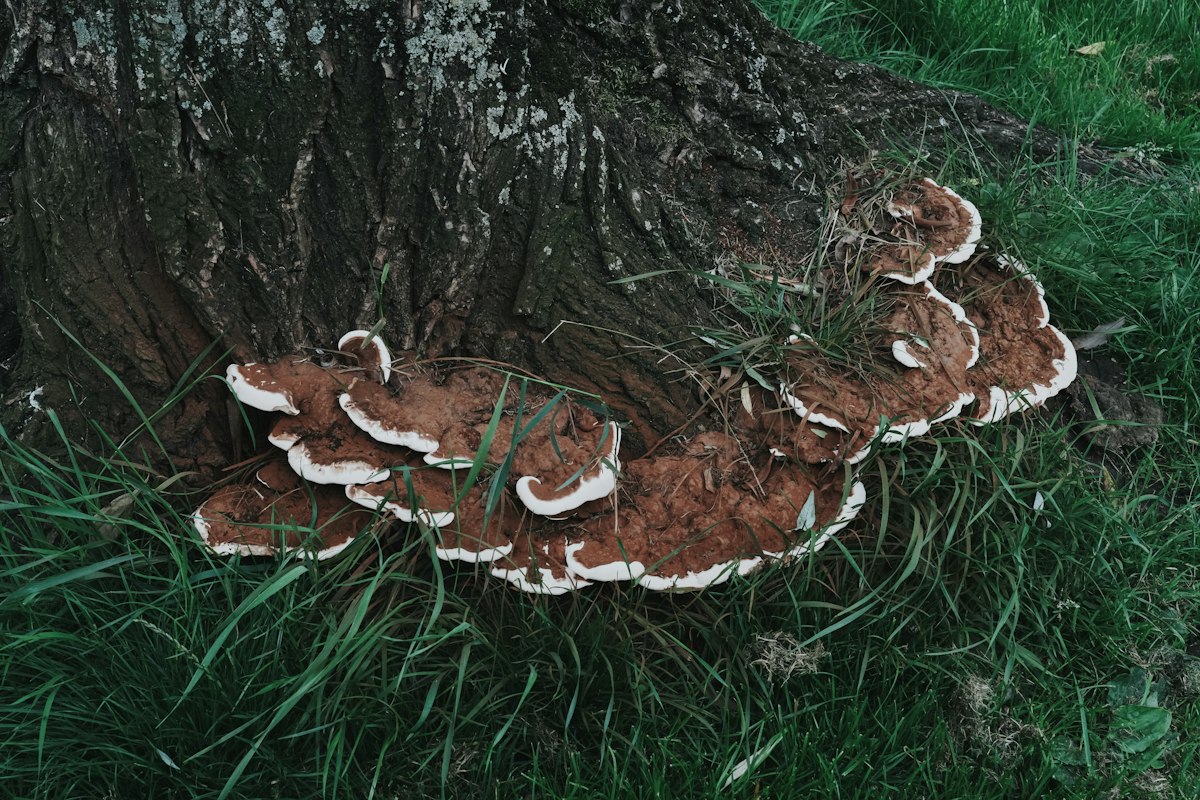
Not all fungi are equal. Ganoderma (artist's conk, a flat shelf fungus) and Phellinus (a brownish shelf) tend to indicate severe heart rot. Honey fungus (Armillaria) is aggressive and can spread to surrounding trees. Surface molds and lichens, by contrast, are usually cosmetic. The key test: probe the wood just above the fungi with a screwdriver. If it sinks in more than an inch with moderate pressure, the internal decay is advanced enough that the tree is structurally compromised.
A tree with significant basal decay may still look green and healthy in its canopy — which is why this sign gets missed. Bryan routinely finds trees with healthy-looking crowns and completely hollow bases during routine assessments in Chesterfield and Jefferson County neighborhoods.
4. Are Cracks and Splits in the Trunk a Red Flag?
Yes — and this is one of the most underestimated warning signs. Vertical cracks running along the trunk are typically caused by rapid temperature changes (common in Missouri winters), storm stress, or structural weakness from past damage. Horizontal cracks or "shear zones" are even more serious: they indicate the trunk is failing under compression load.
According to the Tree Care Industry Association, co-dominant stems — two main trunks of similar diameter growing from the same base — are prone to forming included bark in the crotch. That junction becomes a failure point under wind load. Silver maples and Bradford pears (common in St. Peters and O'Fallon yards) are notorious for this type of structural defect.
If you see a crack that goes all the way through the trunk, or a split opening at a major crotch, don't wait. That tree can come apart in the next thunderstorm. Our full tree removal service includes assessing exactly these structural issues before we touch the saw.
5. Could That Hollow Trunk Be Hiding a Bigger Problem?
A hollow trunk doesn't automatically mean a tree must come down — but it changes the structural math significantly. Sound wood on the outside shell of a trunk can maintain surprising strength even when the interior is hollow, similar to a steel pipe. The ISA's tree risk resources offer guidance that arborists use a rough threshold: if the remaining sound shell is less than one-third of the trunk diameter, the tree has lost too much structural capacity to be safe in a wind event.
Bryan has assessed hundreds of hollow trees in Lincoln County and St. Charles County. His practical test: knock on the trunk with a mallet at various heights. A solid "thud" indicates sound wood; a hollow "boom" resonates through a decayed interior. If the hollow section extends 6 feet or more up the trunk, or if the entry wound is at the base, removal is typically the recommendation.
Don't confuse a hollow trunk with a mere cavity. Smaller cavities from past branch removal are common and manageable with proper arborist care. Full hollowing — where you can see daylight through the base or insert your arm into the trunk — is a different situation entirely. See our guide on dead limbs vs. a dying tree for how to distinguish between the two.
6. Is Your Ash Tree Already Too Far Gone From Emerald Ash Borer?
Emerald Ash Borer (EAB) has been devastating Missouri's ash tree population since it arrived in the state. As of 2026, the Missouri Department of Conservation confirms EAB is present throughout St. Charles and St. Louis counties with no county unaffected. Once a tree is infested, the larvae girdle the tree by cutting off water and nutrient transport beneath the bark. An ash tree that has lost 50% or more of its canopy from EAB is beyond the point where treatment is cost-effective.
Signs of EAB beyond crown die-back include: S-shaped galleries visible under loose or split bark, D-shaped exit holes (about 1/8 inch wide) in the outer bark, and woodpecker damage (heavy pecking indicates the birds are feeding on larvae underneath). If you have an untreated ash tree in your yard showing any of these signs, a hazard assessment is overdue.
Oak wilt is the other Missouri-specific threat to watch. It affects pin oaks and red oaks primarily, and it spreads rapidly during spring pruning season when fresh cuts attract sap beetles carrying the fungus. Oaks showing rapid wilt from the outside crown inward during spring and summer — especially in the same neighborhood where other oaks have died — should be assessed promptly.
7. Should Storm Damage Trigger an Immediate Assessment?
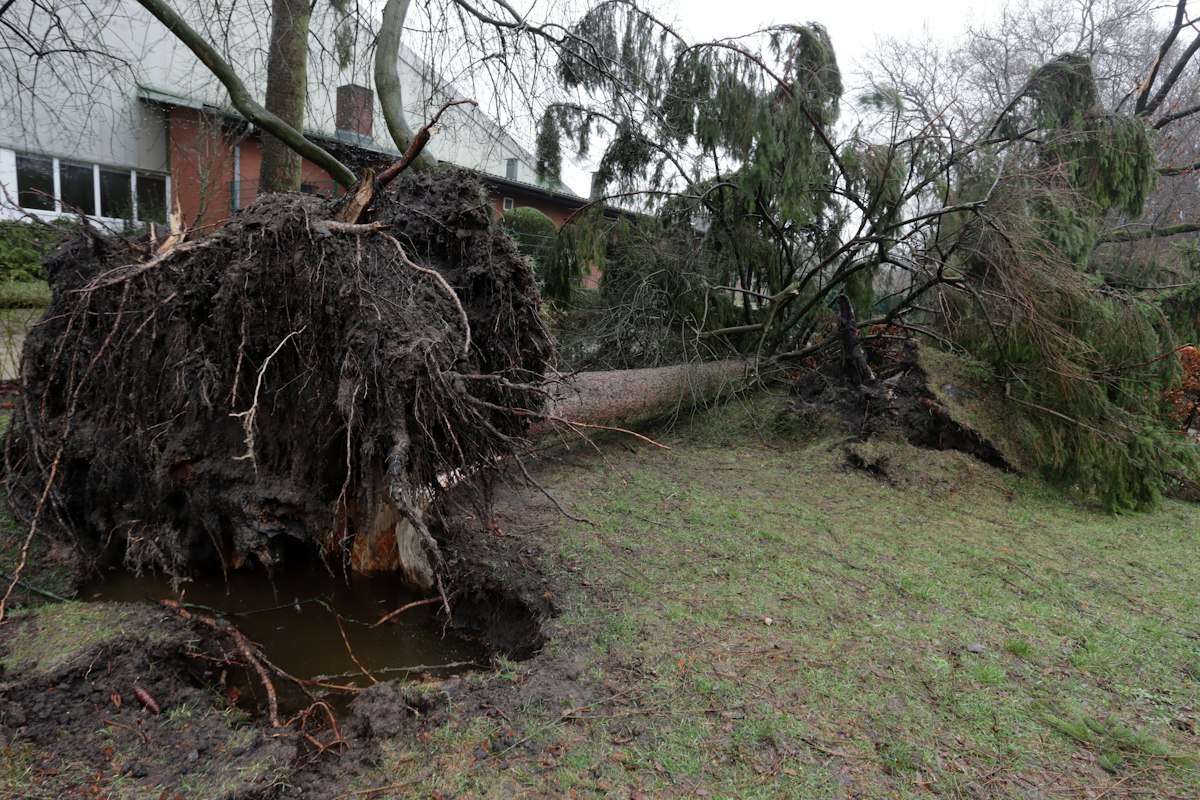
After any significant storm in the St. Louis metro — and the area sees severe thunderstorms, ice storms, and occasional straight-line wind events every year — a post-storm walkthrough of your trees is essential. The MU Extension's tree risk assessment guidance identifies several post-storm conditions that require professional evaluation: broken scaffold limbs still attached to the crown (widow-makers), split leaders, uprooted root balls, or any limb hanging over a structure.
Bryan's field observation: "After a bad storm, we respond to a lot of calls where a limb is hanging 30 feet up, caught in the canopy. Homeowners think it looks stable. It isn't. A hanging limb that heavy can drop without warning — the compression holding it shifts with temperature changes."
The threshold Bryan uses: if more than 50% of the live crown is gone, or if one of the two main scaffold limbs is broken, the tree's long-term viability is compromised even if it doesn't fall immediately. Removal now avoids a much messier, more dangerous emergency removal after the next storm. Use our hazardous tree checklist as a starting point for your own post-storm walkthrough before calling.
When You See These Signs, What Should You Do Next?
The answer depends on the combination and severity of signs you observe. One small dead branch in an otherwise healthy tree? Schedule deadwooding. A sudden new lean after a storm, with fungal growth at the base and cracks in the trunk? That's an emergency call.
B. Woody's Tree Service has been serving St. Charles County and the St. Louis metro since 2011. Bryan Wood and his crew are licensed, bonded, and insured, and they offer free on-site estimates with no obligation. If you're not sure whether a tree needs to come down, a professional assessment takes 15–20 minutes and gives you a clear answer either way.
Call (636) 970-9023 or email treesbywoody@gmail.com to schedule your free estimate. We offer a military discount and senior discount for qualifying customers.
Frequently Asked Questions
How do I know if my tree is dead or just dormant?
Scratch a small section of bark near a branch tip. If the layer underneath is green and moist, the tree is alive. If it's brown and dry across multiple branches in different parts of the crown, the tree is likely dead or dying. Dead trees in Missouri lose their structural integrity faster than people expect — decay fungi move in quickly once the tree stops producing natural defenses. A professional assessment will confirm whether the tree can be saved or needs to come down.
Is a leaning tree always dangerous?
Not always. Trees lean naturally toward light, and a gradual, long-standing lean with a stable root plate and full healthy canopy is usually not an emergency. What's dangerous is a new lean — one that appeared after a storm, heavy rain, or over a single growing season. That sudden change signals root failure or trunk compromise. If you can see cracked or heaved soil on the side the tree is leaning away from, call for an assessment the same day.
What causes a tree to become hazardous after a storm?
St. Louis metro storms frequently cause crown damage, split leaders, and root heaving. When more than 50% of the crown is damaged or a major scaffold branch cracks, the tree's structural integrity is compromised even if it remains standing. Hanging limbs — called widow-makers — are the most immediate hazard. They're held by friction and bark compression, and can drop without warning. These should be addressed within 24 hours of a storm event.
How much does tree removal cost in St. Charles County?
Tree removal cost depends on tree size, species, location relative to structures, and job complexity. There's no honest flat-rate answer without seeing the tree in person. B. Woody's Tree Service provides free on-site estimates — call (636) 970-9023 to schedule. Most residential removals in St. Charles County and surrounding areas are completed in a single day.
Can I save a tree that has fungal growth at the base?
It depends on the species of fungus and the extent of internal decay. Some bracket fungi indicate advanced heart rot that makes the tree structurally unsound — in those cases, removal is the safest option. Others are surface-level and the tree can be monitored or treated. Bryan Wood can assess whether the decay is limited to the root collar or has advanced through the main trunk during a free on-site estimate.
What trees are most vulnerable to hazards in Missouri?
Silver maple, cottonwood, and box elder are structurally prone to branch failure, especially co-dominant stems. Ash trees across St. Charles and St. Louis counties face widespread Emerald Ash Borer (EAB) infestation. Pin oaks and red oaks are susceptible to oak wilt, which spreads rapidly in spring. Any of these species showing crown dieback, canopy thinning, or visible bark damage should be inspected promptly.
Sources
- Missouri Department of Conservation — Tree Care
- MU Extension — Tree Risk Assessment (Publication G6866)
- Tree Care Industry Association — Hazardous Tree Identification
- International Society of Arboriculture — Tree Risk Resources
- Arbor Day Foundation — When to Remove a Tree
- Missouri Department of Conservation — Emerald Ash Borer
Frequently Asked Questions
How do I know if my tree is dead or just dormant?
Scratch a small section of bark near a branch tip. If the layer underneath is green and moist, the tree is alive. If it's brown and dry all the way through multiple branches, the tree is likely dead or dying. Dead trees in Missouri lose their structural integrity quickly and should be assessed by a professional.
Is a leaning tree always dangerous?
Not always. Trees naturally lean toward light, and a gradual historic lean with stable root plate is usually fine. What's dangerous is a sudden new lean, especially after a storm or heavy rain — that signals root failure or trunk compromise that warrants immediate removal.
What causes a tree to become hazardous after a storm?
St. Louis metro storms frequently cause crown damage, split leaders, and root heaving. When more than 50% of the crown is damaged or a major scaffold branch cracks, the tree's structure is compromised. Hanging limbs (widow-makers) pose the most immediate danger and should be addressed within 24 hours.
How much does tree removal cost in St. Charles County?
Tree removal cost depends on tree size, species, location, and complexity of the job. B. Woody's Tree Service provides free estimates — call (636) 970-9023 for an on-site assessment with no obligation.
Can I save a tree that has fungal growth at the base?
It depends on the fungus type and extent of internal decay. Some bracket fungi indicate advanced heart rot that makes the tree structurally unsound. Others are surface-only and the tree can be treated. Bryan Wood can assess whether the decay is limited to the root collar or has spread through the main trunk.
What trees are most vulnerable to hazards in Missouri?
Silver maple, cottonwood, and box elder are prone to branch failure. Ash trees are vulnerable to Emerald Ash Borer (EAB), which is widespread across St. Charles and St. Louis counties. Pin oaks can suffer from oak wilt, a fungal disease spread by beetles. Any of these showing crown dieback or canopy thinning should be inspected promptly.