
Hazardous Tree Checklist: How to Inspect Your Own Trees
Use the same 4-zone ISA method arborists use to spot hazardous trees - a 20-minute ground inspection, no tools needed. St. Charles and St. Louis homeowners.
A tree is hazardous when it has a structural defect (a crack, a cavity, failing roots, or significant deadwood) combined with a target: a house, car, or person in its fall zone. Most dangerous trees can be identified with a 20-minute ground inspection before any professional ever sets foot on your property.
Key Takeaways
- A tree needs a defect AND a target to be hazardous; most low-risk trees still warrant annual monitoring.
- The Arbor Day Foundation recommends inspecting trees twice per year, spring and fall, plus within 48 hours after any major storm.
- The ISA's TRAQ standard uses a 4-zone method: crown, trunk, root flare, and target zone. You can apply the same framework at home.
- Finding two or more warning signs at the same time is your trigger to stop the DIY inspection and call a certified arborist.
Here's the same four-zone inspection process I use before every estimate. You don't need to climb anything or use any tools. You need 20 minutes, a safe vantage point, and a willingness to look carefully. After two decades of assessing trees in St. Charles and St. Louis counties, especially after ice storms, high winds, and the EAB-driven ash die-off, I can tell you that most hazardous trees give you plenty of warning signs. You just have to know what to look for.
-- Bryan Wood, B. Woody's Tree Service
What Makes a Tree Actually Dangerous?
The International Society of Arboriculture's Tree Risk Assessment Qualification (TRAQ) program defines tree risk as the combination of three factors: the likelihood of failure, the likelihood that a failure reaches a target, and the consequence of impact. In plain language: a cracked tree standing in an empty field is a low-risk tree. The same cracked tree hanging over your bedroom is a high-risk tree.
This is why your inspection has two parts. First, you read the tree itself. Then you read what's underneath it.
Zone 1: Ground Inspection -- Start 30 Feet Back
Before you approach any tree you're concerned about, stop at a distance. Look at the overall profile.
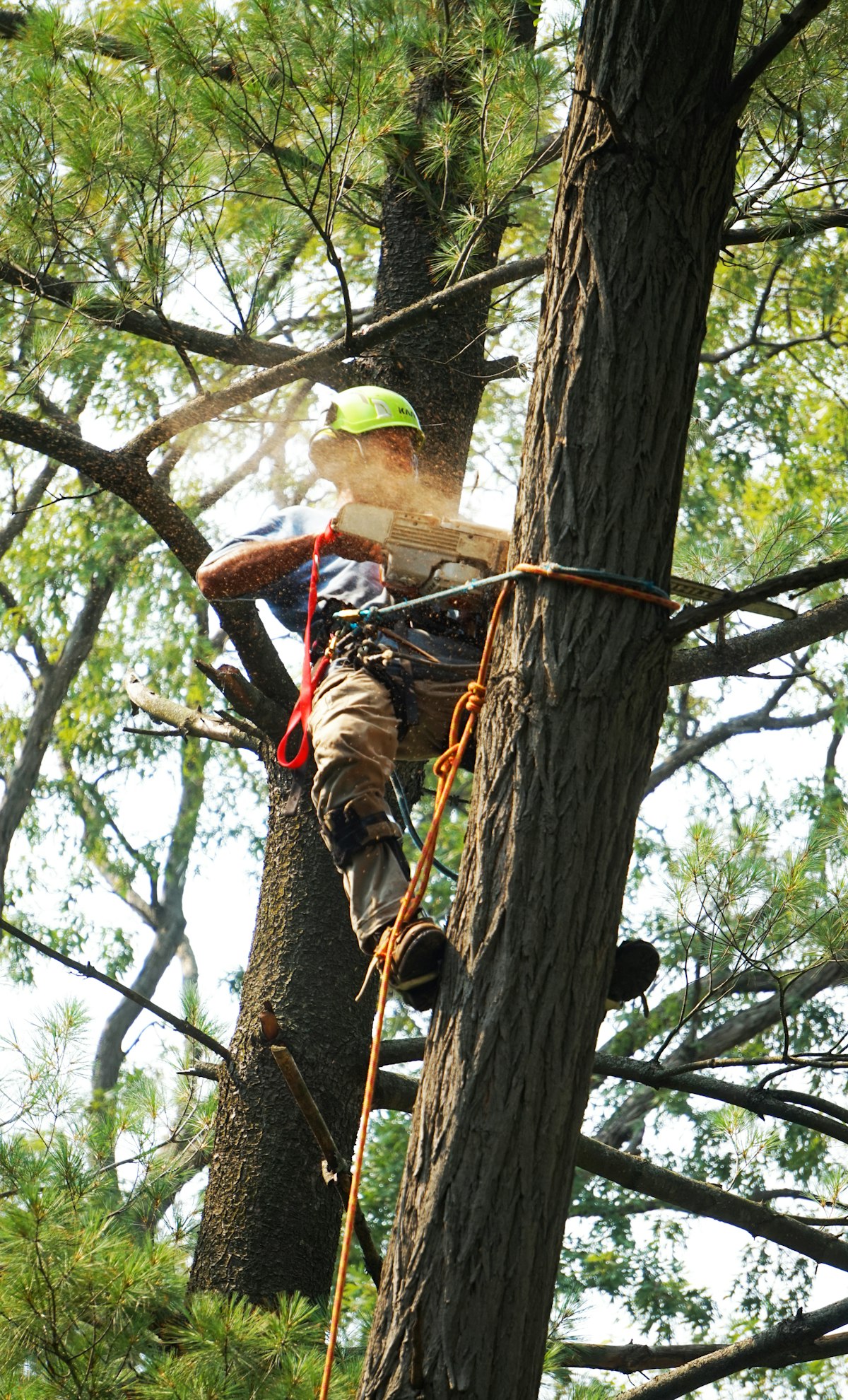
What to look for from a distance:
A healthy tree grows roughly symmetrically. Its crown fills out on all sides, and its trunk rises vertically, or with a consistent lean it has maintained for years. Anything that breaks that pattern is a starting point for closer inspection.
Ask yourself these questions as you circle the tree at a 30-foot radius:
- Does the crown appear one-sided, sparse, or patchy? A lopsided crown often means one side has experienced root damage, soil compaction, or disease.
- Is the trunk vertical? A slight lean that has been there for years is different from a recent tilt. Lean that developed in the past season, especially after wet weather, can mean root failure.
- Are there large dead branches visible in the upper crown? The ISA refers to branches that have lost their bark and turned gray or silver as "widow makers" -- they can fall without warning in wind, even with no storm in the forecast.
- Is the tree leaning toward a structure, a fence line, or a play area?
Field note from Bryan: In Missouri, we see two seasons that generate the most emergency calls. January through February ice storms. And the early-summer wind events that follow a dry spring. After ice loading, even healthy-looking branches can be structurally compromised in ways that don't show until the next windy day. If you had an ice storm this winter, add a spring inspection to your calendar.
Zone 2: What Does Your Trunk Tell You?
Once you've completed the wide view, move in to examine the trunk from base to first major branch union. Walk all the way around it. Never stand directly under the crown while inspecting.
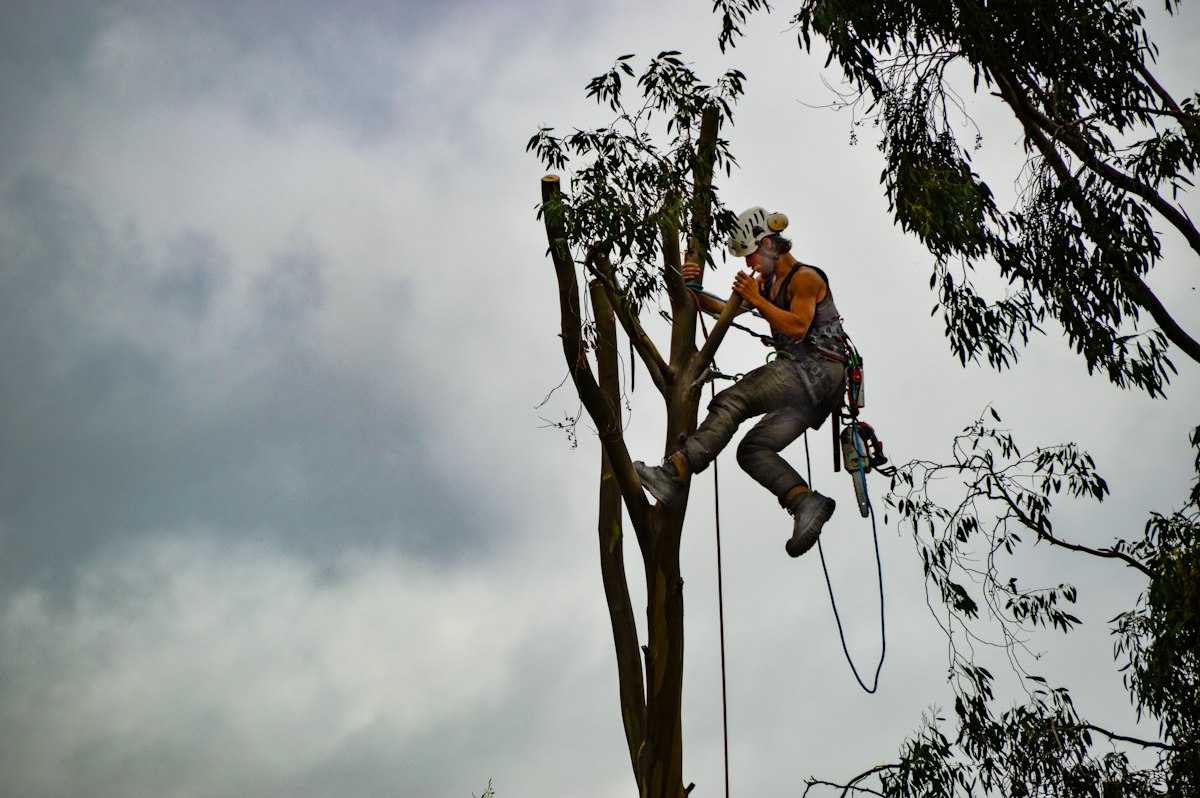
Cracks and splits
Cracks are one of the most serious defects you can find. The Arbor Day Foundation's hazard tree guide notes that two vertical cracks on opposite sides of a trunk (called through-cracks) indicate root injury and are extremely dangerous. A single deep crack running vertically along the trunk also warrants professional evaluation.
Look carefully at the seam where two major trunks divide (co-dominant stems). A tight V-shape with bark growing inward between the two stems, called "included bark," is a known failure point. These unions are structurally weaker than a wide U-shape and can split under wind or ice loading.
Cavities
A cavity (hollow area) in the trunk doesn't automatically mean removal, but it changes the equation. The question is wall thickness: a large cavity with thin remaining wood compromises the trunk's ability to carry load. You can't measure wall thickness from the outside. But if you can see daylight through the trunk, or if the cavity is wider than one-third of the trunk's diameter, it needs professional review.
Fungal growth
Mushrooms or shelf fungi (conks) growing directly from the trunk or visible roots are a serious warning sign. In its 2023 hazard assessment update, the TCIA's Hazard Tree Assessment Task Force noted that fungal fruiting bodies indicate internal decay that may be far more extensive than what's visible on the exterior. A tree showing conks has likely been decaying internally for years.
One important Missouri-specific note: if you have ash trees on your property, look closely for small, D-shaped exit holes in the bark and for serpentine S-shaped galleries visible under any loose bark. These are signatures of the emerald ash borer, an invasive pest that has killed millions of ash trees across Missouri. As of 2024, the USDA Forest Service's EAB resources document that EAB-killed ash trees become brittle and hazardous within 3 to 5 years of infestation, much faster than most other tree diseases. An ash tree showing EAB signs needs a timeline.
Bark damage and cankers
Missing bark (a "basal canker" at the base, or a "stem canker" higher up) exposes the tree's vascular tissue and creates an entry point for decay fungi. A wound that has callused over cleanly, with a roll of new wood around the edges, is usually healing. A wound with sunken edges, discolored wood in the center, or oozing sap is not healing and needs attention.
Zone 3: Crown Inspection -- Look Up Carefully
The crown contains the tree's most active growing tissue and its most common source of immediate falling hazards.
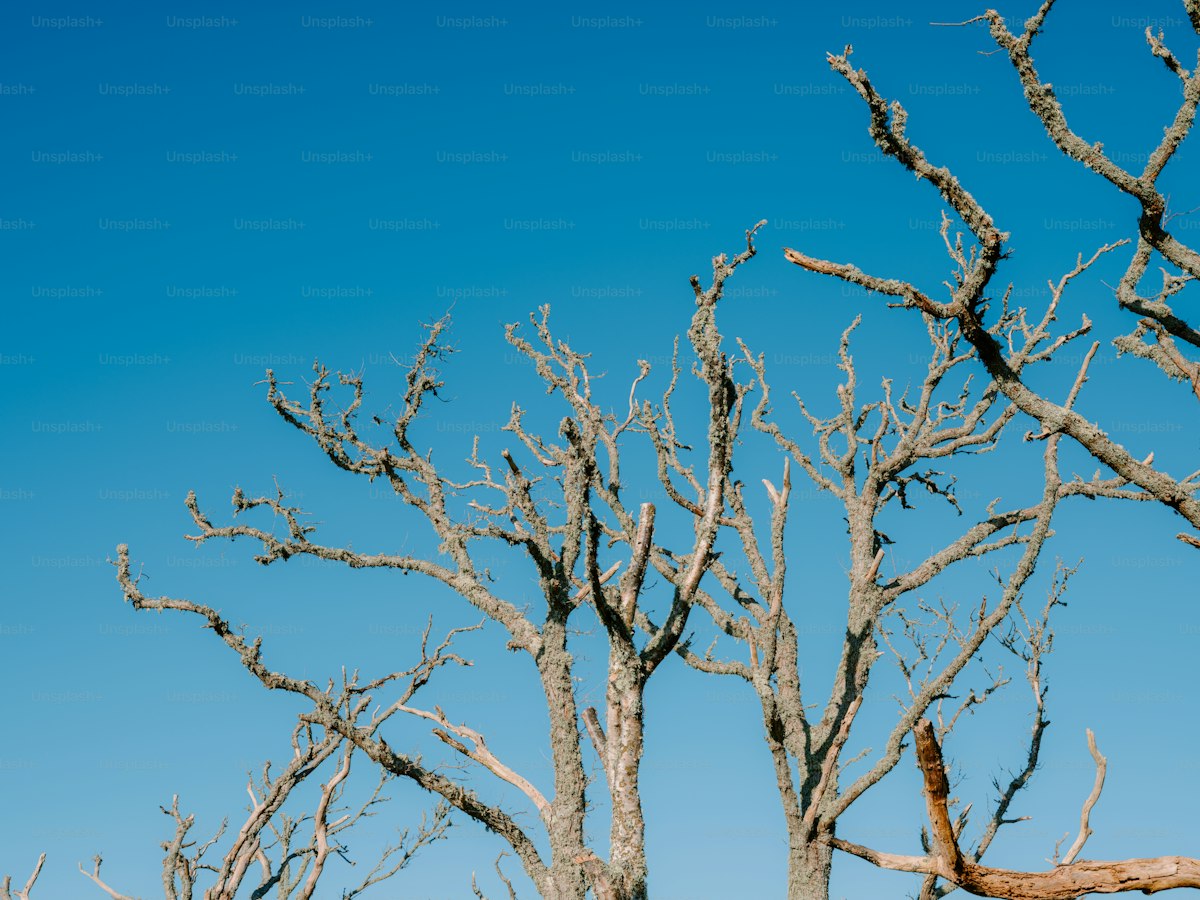
Deadwood
Dead branches are identifiable by their gray or silver color, missing bark, and (in spring and summer) by the absence of leaves when surrounding branches have leafed out. Any dead branch larger than about two inches in diameter that sits above a structure, a driveway, or an area where people walk or play should be removed. This is exactly what deadwooding addresses: targeted removal of specific hazardous limbs without taking down an otherwise healthy tree.
What most homeowners miss: Hanging branches, called "hangers," are actually more dangerous than cleanly broken ones. A hanger is a broken branch still held in the crown by other branches or by its own attached bark. It can fall days or weeks after the original break, often with no wind trigger at all. Look carefully for branches at odd angles in the upper crown.
Crown dieback
Crown dieback (branches dying progressively from the tips inward) often signals a root problem rather than a crown problem. Roots supply water and nutrients. When the root system is damaged by construction, soil compaction, drought, or disease, the crown starves from the outside in. The University of Missouri Extension's storm damage guide notes that a tree which has lost more than 50 percent of its crown, whether to storm damage or progressive dieback, generally cannot fully recover.
Asymmetrical growth
A crown heavily weighted to one side increases the mechanical load on the trunk and root system on that side. This matters most when the heavy side is also the side leaning toward a structure. Crown reduction pruning, done correctly by a trained arborist, can rebalance the load. See our tree trimming services for what that process looks like.
Zone 4: What Warning Signs Hide at Ground Level?
Root problems are the hardest defects to see and the most catastrophic when they cause failure. A tree can look perfectly healthy above ground while its root system is compromised below.
Heaving soil
Soil that has lifted or cracked on one side of the tree, especially in a roughly circular arc around the base, is a sign the root plate is beginning to fail. This is one of the few emergencies in tree assessment. A tree with heaving soil should be treated as if it could fall at any time.
Mushrooms at the base
Mushrooms growing from the root flare or from the soil directly around the base indicate Armillaria (honey fungus) or another root-decay pathogen. According to the Missouri Department of Conservation's established tree care guidance, soil fungi combined with other defects are strong predictors of whole-tree failure.
Construction damage
If your tree is within 20 feet of a recent addition, driveway extension, or utility trench, there's a real possibility that roots were cut or compacted during construction. Trees can decline for 3 to 7 years after construction damage before the effects become visible in the crown. If you had recent construction and your tree looks worse than it did two years ago, connect those dots.
Girdling roots
A root that wraps around the base of the trunk, visible as a hard ridge pressing into the bark, can slowly strangle the tree by restricting vascular flow. These are common in trees that were planted too deep as saplings.
Your Complete Inspection Checklist
Use this list every spring, every fall, and within 48 hours after any major storm. Check off each item as you complete it.
Ground zone (30 feet back):
- Crown is roughly symmetrical; no major one-sided dieback
- Trunk is vertical or has maintained its existing lean without recent change
- No large dead branches visible hanging in the upper crown
- Tree is not leaning toward a structure, vehicle, or occupied area
Trunk zone:
- No cracks or splits in the trunk or at major branch unions
- No co-dominant stems with tight V-shapes and included bark
- No cavities wider than one-third of trunk diameter
- No mushrooms, shelf fungi, or conks on the trunk or roots
- Bark is intact; any wounds have clean, callused edges
- Ash trees: no D-shaped exit holes or S-shaped galleries under bark
Crown zone:
- No dead branches larger than 2 inches in diameter above structures or paths
- No hanging or broken branches (hangers) in the upper crown
- Crown dieback is less than 25 percent of total canopy
- No large scaffold branches with cracked or peeling bark
Root zone:
- Soil around the base is level; no heaving or cracking on one side
- No mushrooms growing from the root flare or base soil
- No girdling roots pressing into the trunk bark
- No recent construction within 20 feet of the trunk
Two or more boxes unchecked = call a certified arborist for a professional assessment.
When Should You Stop and Call a Pro?
A DIY inspection gets you about 80 percent of the information a professional can gather from the ground. The other 20 percent (decay mapping, root plate integrity, cable and brace load calculations) requires training and sometimes specialized tools.
Stop the DIY assessment and call a professional when:
- You find two or more warning signs on the same tree
- There's any heaving soil around the base
- You see a crack running through the trunk
- The tree is within striking distance of your house, a power line, or a neighbor's property
- The tree has recently developed a lean or shifted position
- You're dealing with a large ash tree that shows EAB signs
For the 7 warning signs a tree needs to come down, we go deeper on the specific defects that most often result in professional removal recommendations.
If removal does become necessary, it's also worth knowing the permit requirements. Here's what you need to know about tree removal permits in St. Charles County before any work begins.
The one mistake I see most often: Homeowners wait. They see a crack, they see dead branches, they see a tree that doesn't look right -- and they don't call because they're worried about cost or they hope the tree will improve on its own. Hazardous trees don't improve on their own. They get worse, and they fail at the worst possible time. The free estimate takes 15 minutes and gives you real information to make a real decision.
Frequently Asked Questions
How do I know if a tree is a danger to my house?
A tree is a danger to your house when it has one or more structural defects (a crack in the trunk, a large dead branch, a cavity, or fungal growth) AND is close enough to fall on a structure. Distance matters: a 60-foot tree can fall 60 feet. Check the tree's height, the direction of any lean, and what sits in its fall zone.
What are the signs of a dying tree?
The most reliable signs of a dying tree are progressive crown dieback (branches dying from the tips inward), sparse or off-color foliage, mushrooms or shelf fungi growing from the trunk or roots, vertical cracks in the bark, and extensive areas of missing bark. A single sign warrants monitoring; two or more signs together warrant a professional evaluation.
Can a leaning tree be saved?
A tree that has always leaned slightly can often be maintained safely with proper pruning to redistribute crown weight. A tree that has recently developed a lean, especially after a storm or during wet soil conditions, is a different situation entirely. Sudden lean indicates root failure and is an emergency. Don't wait on a tree that has shifted position.
How often should I inspect my trees?
The Arbor Day Foundation recommends inspecting your trees twice a year: once in late spring when the tree is in full leaf (making crown problems easier to spot) and once in late fall after leaf drop (making structural defects visible). Also inspect within 48 hours after any major ice storm, high-wind event, or severe thunderstorm.
What is deadwooding and when is it needed?
Deadwooding is the selective removal of dead, dying, or diseased branches from a tree's crown. It's needed when you spot dead branches larger than two inches in diameter, branches that have lost their bark, or limbs hanging at an angle above a structure or play area. Deadwooding extends a tree's life and eliminates the most immediate falling hazard without removing the entire tree. Learn more about our deadwooding service.
When should a tree be removed vs. trimmed?
Trimming is the right call when a tree is structurally sound but has dead branches, crossing limbs, or unbalanced growth. Removal is the right call when the trunk itself is compromised (major cracks, large cavities, significant decay) or when more than 50 percent of the crown is dead or damaged. Read more about our tree removal service to understand what the process involves.
Get a Free Estimate
If your inspection turns up any of the warning signs above, don't wait. Call Bryan Wood at B. Woody's Tree Service at (636) 970-9023 for a free estimate. We serve St. Charles County, St. Louis County, and surrounding areas throughout the greater St. Louis metro.
We're licensed, bonded, and insured. Military and senior discounts available. 24-hour emergency service for storm damage.
Sources
- ISA Tree Risk Assessment Qualification (TRAQ) Program -- International Society of Arboriculture
- TCIA Hazard Tree Assessment Task Force Update -- Tree Care Industry Association
- Established Tree Care -- Missouri Department of Conservation
- Don't Make Hasty Tree-Care Decisions After Storm -- Missouri Department of Conservation
- First Aid for Storm-Damaged Trees (G6867) -- University of Missouri Extension
- Pruning Ornamental Trees and Shrubs (MG8) -- University of Missouri Extension
- Tree Risk Assessment -- Recognizing and Preventing Hazard Trees -- Arbor Day Foundation
- Identify and Manage Hazardous Defects in Your Trees -- Arbor Day Foundation
- Emerald Ash Borer Resources -- USDA Forest Service
Frequently Asked Questions
How do I know if a tree is a danger to my house?
A tree is a danger to your house when it has one or more structural defects -- a crack in the trunk, a large dead branch, a cavity, or fungal growth -- AND is close enough to fall on a structure. Distance matters: a 60-foot tree can fall 60 feet. Check the tree's height, the direction of any lean, and what sits in its fall zone.
What are the signs of a dying tree?
The most reliable signs of a dying tree are progressive crown dieback (branches dying from the tips inward), sparse or off-color foliage, mushrooms or shelf fungi growing from the trunk or roots, vertical cracks in the bark, and extensive areas of missing bark. A single sign warrants monitoring; two or more signs together warrant a professional evaluation.
Can a leaning tree be saved?
A tree that has always leaned slightly can often be maintained safely with proper pruning to redistribute crown weight. A tree that has recently developed a lean -- especially after a storm or during wet soil conditions -- is a different situation entirely. Sudden lean indicates root failure and is an emergency. Don't wait on a tree that has shifted position.
How often should I inspect my trees?
The Arbor Day Foundation recommends inspecting your trees twice a year -- once in late spring when the tree is in full leaf and once in late fall after leaf drop. Also inspect within 48 hours after any major ice storm, high-wind event, or severe thunderstorm.
What is deadwooding and when is it needed?
Deadwooding is the selective removal of dead, dying, or diseased branches from a tree's crown. It's needed when you spot dead branches larger than two inches in diameter, branches that have lost their bark, or limbs hanging at an angle above a structure or play area. Deadwooding extends a tree's life and eliminates the most immediate falling hazard without removing the entire tree.
When should a tree be removed vs. trimmed?
Trimming is the right call when a tree is structurally sound but has dead branches, crossing limbs, or unbalanced growth. Removal is the right call when the trunk itself is compromised -- major cracks, large cavities, significant decay -- or when more than 50 percent of the crown is dead or damaged. When in doubt, get a professional assessment before deciding.
Sources
- ISA Tree Risk Assessment Qualification (TRAQ) Program Guide
- TCIA Hazard Tree Assessment Task Force Update
- Missouri Department of Conservation - Established Tree Care
- Missouri Department of Conservation - Don't Make Hasty Tree-Care Decisions After Storm
- University of Missouri Extension - First Aid for Storm-Damaged Trees (G6867)
- University of Missouri Extension - Pruning Ornamental Trees and Shrubs (MG8)
- Arbor Day Foundation - Tree Risk Assessment: Recognizing and Preventing Hazard Trees
- Arbor Day Foundation - Identify and Manage Hazardous Defects in Your Trees
- USDA Forest Service - Emerald Ash Borer Resources